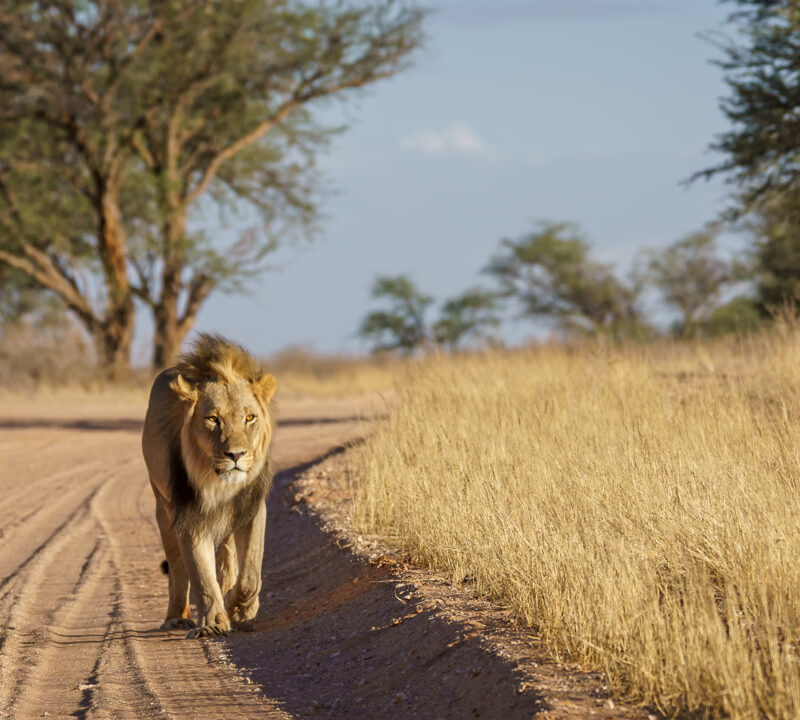
On a Tanzania safari, it can sometimes seem as though your guide finds animals that appeared from nowhere. While you are admiring the landscape, your guide may suddenly stop the vehicle and point toward a leopard hidden in a distant tree or a lion almost completely concealed by tall grass.
This is not simply good luck. Professional safari guides develop an exceptional awareness of the wilderness through years of training and experience. They read tracks, sounds, animal behaviour, and subtle changes in the environment to understand what may be happening nearby.
Here are some of the details your safari guide notices that you might otherwise miss.
Tracks on the Road
Animal footprints provide valuable information about recent wildlife activity. A guide can often identify the species, direction of travel, and whether the tracks are fresh.
Large paw prints may indicate that a lion crossed the road during the night. Smaller tracks could belong to a jackal, mongoose, or serval. The depth and sharpness of a footprint can also suggest how recently the animal passed.
To most visitors, these marks may look like ordinary impressions in the dust. To an experienced guide, they tell a story.
Alarm Calls from Other Animals
Animals frequently warn one another when a predator is nearby. Impalas may produce sharp alarm calls, monkeys may become unusually vocal, and birds can behave differently when they detect danger.
Your guide listens carefully for these sounds. An alarm call may reveal that a leopard is moving through the bushes or that a lion is approaching a herd.
Guides also pay attention to silence. A sudden change in the usual sounds of the bush can be just as meaningful as a loud warning call.
The Direction Animals Are Looking
When several animals suddenly stare in the same direction, there is usually a reason. They may have seen, heard, or smelled something that is not yet visible to you.
A herd of zebras standing completely still could be watching a predator. Giraffes may use their height to monitor a lion moving through the grass. Antelopes may gather together and face a potential threat.
Instead of looking only at the animals in front of the vehicle, your guide also observes what has captured their attention.
Shapes Hidden in the Landscape
Wild animals are naturally camouflaged. A lion’s coat blends with dry grass, while a leopard can disappear among branches and shadows. Even elephants can be surprisingly difficult to see in thick woodland.
Safari guides learn to recognise unusual shapes, colours, and movements. What looks like a rock may be a sleeping lion. A branch may turn out to be a leopard’s tail. A small movement in the grass could reveal a cheetah watching nearby prey.
This ability develops through experience and familiarity with each animal’s preferred habitat.
Circling Vultures
Vultures provide important clues about activity on the ground. When several vultures circle or gather in one area, they may have located a carcass.
This could lead your guide to a recent predator kill and possibly to lions, hyenas, or other scavengers nearby. However, circling birds do not always indicate a kill. They may simply be using warm rising air to gain height.
A knowledgeable guide considers the birds’ behaviour, altitude, and direction before deciding whether to investigate.
Changes in the Wind
Wind affects how animals detect one another. Predators often approach prey from downwind so their scent is less likely to be noticed.
Your guide may consider the wind direction when interpreting tracks or watching an animal hunt. It can also influence where animals rest, graze, or move during the day.
These subtle environmental details help guides anticipate what an animal might do next.
Fresh Droppings and Broken Vegetation
Dung can reveal which animals recently visited an area and how long ago they passed. Fresh elephant dung, for example, may indicate that a herd is not far away.
Broken branches, stripped bark, disturbed grass, and damaged shrubs also provide useful clues. Elephants leave particularly visible signs as they feed and move through woodland.
By combining this evidence with tracks and sounds, your guide can build a clearer picture of nearby wildlife activity.
Familiar Territories and Habitats
Animals are not distributed randomly across a national park. Each species has preferred habitats, and many predators establish territories or regularly return to particular areas.
Your guide may know where a leopard often rests, where lions usually hunt, or which riverbanks are favoured by elephants. Guides also exchange recent wildlife information with one another, helping them decide which areas are worth exploring.
This local knowledge becomes especially valuable in vast landscapes such as Serengeti National Park.
Subtle Animal Behaviour
Finding wildlife is only part of a guide’s work. Understanding behaviour can help predict what may happen next.
A lion repeatedly lifting its head may be preparing to move. A cheetah studying a herd could be selecting its target. Elephants gathering closely around their calves may have sensed danger.
Recognising these signals allows your guide to position the vehicle respectfully and give you the best possible opportunity to observe the behaviour without disturbing the animals.
The Smaller Creatures Around You
It is easy to focus entirely on lions, elephants, and other famous animals, but Tanzania’s wilderness contains much more.
Your guide may show you a colourful agama lizard resting on a rock, a dung beetle moving its prize, or a tiny owl hidden inside a tree. They can identify birds from their calls and explain the role insects, plants, and smaller animals play in the ecosystem.
These discoveries often become some of the most surprising and memorable parts of a safari.
More Than Simply Finding Animals
A professional safari guide is a tracker, interpreter, driver, naturalist, and storyteller. Their knowledge transforms a game drive from a search for animals into a deeper understanding of the wilderness.
The next time your guide stops and studies a distant tree or listens carefully to the bush, pay attention. They may have noticed the first clue to an unforgettable wildlife encounter.
At Serengeti Flavour Safaris, our experienced guides help you discover the details, behaviours, and stories that make Tanzania’s wildlife remarkable. Contact us to begin planning your private Tanzania safari.